Two routes,
one goal
Elmiron® is available in two distinct formulations to suit the clinical needs of women with IC/BPS — oral capsules for systemic convenience, and intravesical solution for direct bladder delivery.
Two routes, one goal — relief for women with IC/BPS
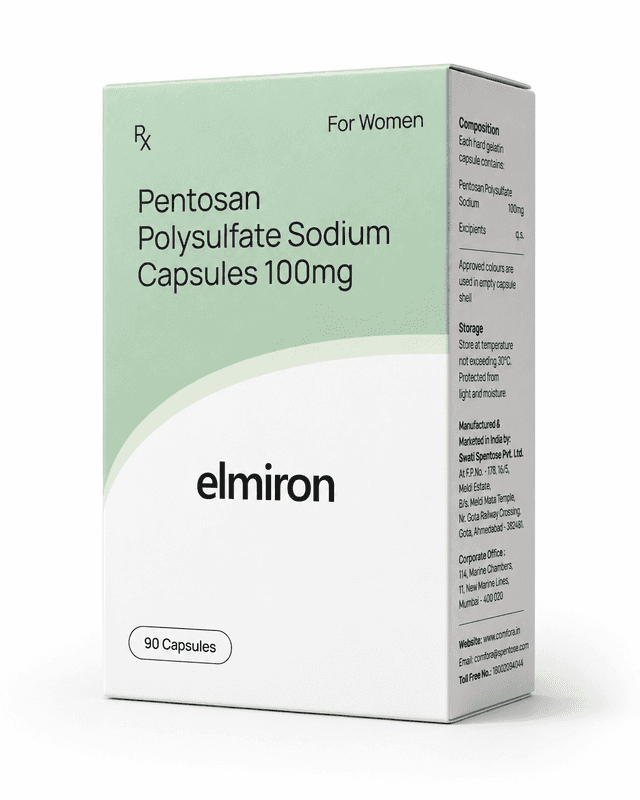
Elmiron® Capsules
Pentosan Polysulfate Sodium
- Strength
- 100 mg
- Form
- Hard Gelatin Capsules
- Dose
- 100 mg three times daily
- Pack
- 30 / 90 Capsules
- Route
- Oral
Take on empty stomach, 1 hour before or 2 hours after meals.
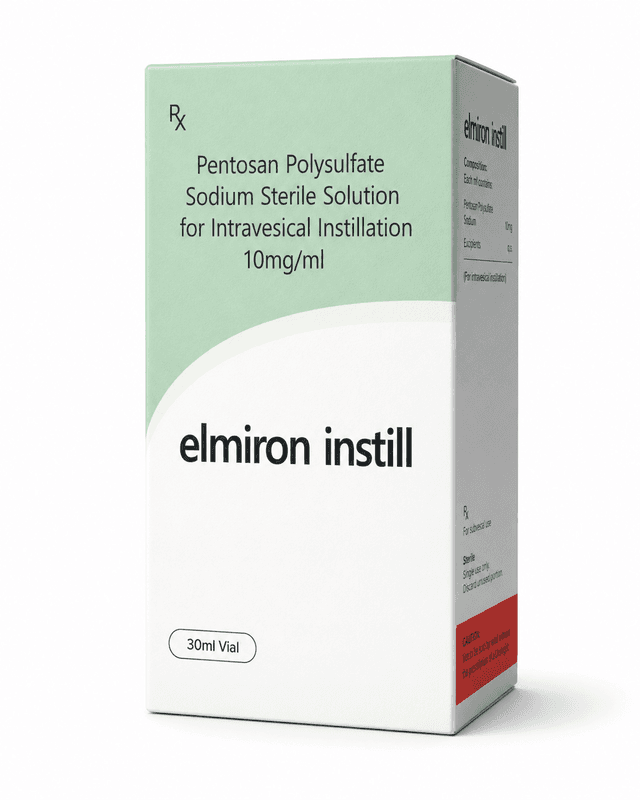
Elmiron® Solution
Pentosan Polysulfate Sodium
- Strength
- 50 mg/mL
- Form
- Sterile Instillation Solution
- Volume
- 40 mL per instillation
- Pack
- 4 Vials
- Route
- Intravesical
Administered by a healthcare professional. Retain for a minimum of 30 minutes.
Dosing Guidelines
Oral (100mg Capsules)
Standard dose: 100 mg three times daily (300 mg/day total). Clinical studies evaluated doses up to 900 mg/day with no dose-response advantage — efficacy is duration-dependent, not dose-dependent.
Administration: Take on empty stomach, at least 1 hour before or 2 hours after meals, with a full glass of water.
Missed dose: Take as soon as remembered. If close to next scheduled dose, skip and resume normal schedule. Do not double-dose.
Duration: First signs of improvement typically at 5–10 weeks. Minimum 3–6 months to assess full clinical benefit. Benefit continues to increase over 1–2 years of continuous use.
Storage: Room temperature, dry place. Do not store in bathroom.
Intravesical (50mg/mL Solution)
Dose: 40 mL (2,000 mg) per instillation
Frequency: Once weekly for 6 weeks (induction), then monthly (maintenance)
Retention: The patient should retain the instillation for a minimum of 30 minutes.
Safety & Contraindications
Common Side Effects
- Diarrhoea and upset stomach
- Abdominal pain or cramps
- Dizziness or headache
- Alopecia (hair loss)
- Mild anticoagulant effect — avoid injury, use soft toothbrush
- Retinal pigmentary changes with very long-term use (>13 years)
Contraindications & Cautions
- Known hypersensitivity to PPS or heparins
- Active bleeding disorders
- Pre-existing retinal eye disease
- Hepatic impairment (use with caution)
- Pregnancy / lactation (consult full PI)
- Concurrent anticoagulant or antiplatelet therapy
Monitoring Requirement
A retinal eye examination (including fundoscopy) should be performed within 6 months of initiating therapy and periodically during treatment. Advise patients to report any changes in vision — including difficulty reading, trouble adapting to low light, or blurred/wavy eyesight — immediately, and ensure women on long-term therapy attend routine ophthalmologic review. Maculopathy risk is cumulative and dose-dependent, typically associated with long-term exposure (>13 years or lifetime dose >1,000 g).
This information is a summary only. Please refer to the complete prescribing information for full safety data, drug interactions, and monitoring recommendations. Rx only. For BD Head enquiries: isshane.guptaa@swatispentose.com or kanchan.londhe@swatispentose.com